Better Relations, Better Revenue

Written by admin

The main reason, which prevents hospitals to implement CRM programme, is that they see CRM as a capital intensive software programme.
|
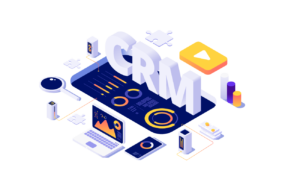
All industries, be it manufacturing or services, have realized the scope of Customer Relationship Management (CRM) application in their marketing activities. Many have implemented the CRM concept as an effective marketing tool,especially in the hospitality sector, which can help them in making consumer’s loyal to their organizations. Most healthcare facilities globally are as yet to get clued on this concept especially in a developing country like India, be it India Shining or Whinning. A few corporate hospitals and some private hospitals have implemented solutions, crafted either inhouse or by their local friendly vendor. This leaves Indian hospitals however have been not very keen on implementing CRM program in their organizations as the demand supply ratio for diagnostic and therapeutic modalities is on a lower side and also decentralization of high tech treatment facility is not applicable due to absence of regulatory authorities. Absence of regionalisation is forcing these hospitals to implement CRM initiatives because in narrow geographical boundaries same types of modalities are present and the competition is so acute that in the available clientele, due to sharing of the patients hospitals sometime find difficult to recover the operating cost also. The main reason, which prevents hospitals to implement CRM programme, is that they see CRM as a capital intensive software programme. The understanding of the hospitals is correct to some extent because CRM is also known as e-relationship management and the nomenclature suggest that CRM cannot be implemented if you don’t have computer infrastructure. Traditional mass marketing is directed at those who don’t know-and probably don’t care-about an organization. In CRM, the focus is on targeted, more personal marketing directed at those who already know us and those who have a higher probability of continuing to use our services. CRM in hospitals is statistically accurate, health care targeted marketing process that assesses the health needs of the residents in the community, monitors health care usage and health events, and then uses a prediction model to determine which residents are most likely to be in need of specific health services. The power of the targeted marketing program is not in its ability to serve as a directed public relations/promotional tool, but rather in its ability to identify markets so that you can effectively get the hospital’s message to individuals in those markets, giving the hospital a step-up on the competition. Steps to implement CRM Maintain database: Hospitals should maintain a database, which can be continuously updated, refined and used to produce on-demand lists of patients who are the best prospects for a particular service, such as maternity, orthopedic work, or cardiovascular services. The list can be generated from the health check department or the diagnostic wing where results of preliminary screening are reported. The biggest problem is the confidentiality of the data as reports and other documents related to health of patient can be seen by the treating physician or any other physician to whom the case has been referred. Use of these documents for the purpose of any activity apart from treatment or retrospective clinical study needs consent of the patient. If the hospital does not takes written consent for access to this data, patient may create legal complications. The idea is that this is a database to be used only by the hospital and its medical staff in marketing to targeted patients. This process shows its physicians, especially specialists, that the hospital can bring them business. The process gives the hospital ongoing market assessment reports. This is an extension of the market assessment that we do initially and can answer questions raised in that assessment. Build a CRM culture: The promise of marketing (e.g., that we deliver quality service, Quality Health care at affordable price) has to be delivered once the patient is into the hospital. Hospitals need to work on educating employees through soft skill training programmes such as customer service, telephone etiquette, interpersonal behaviour. Investment in marketing initiatives can go waste because of a “bad moment” such as a fumbled admitting experience or a rude operator at your telephone bank. To take support of the physicians in general and specialist in particular, hospitals should have solid evidence that we are continuously improving our services and products. The bottom line for successful implementation of CRM — It is not only about implementing software it requires training at every level and a general cultural shift toward excellent customer service. Employ and train patient service officer: Hospitals should appoint Patient service officers and train them to deal with patients, their relatives and their complaints. The patient service officer can report to patient service committee where they can highlight the problems faced by the patients. These officers should be trained to co-ordinate between various support service departments to solve the problems of the patients. It is generally seen that dissatisfaction amongst patients is due to very small problem, which remain unattended to. For example, electricity switch is not working properly and the patients complaints to the nurse, the nurse registers the complaint to the engineering department and then she fails to follow up that whether the switch has been repaired or not. In this particular case is the nurse to be blamed? The answer is no because given the fact that nurse to patient ratio is very critical in most of the hospitals it is very difficult for her to meet the requirements of medical care then where is the time to attend to complaints of the patients. Ideally one Patient Service Officer can be employed for every 10 patients and their job responsibility should be to attend to all the complaints given by these patients from admission to discharge. These officers may not solve all the problems because the resources required in some cases may be beyond the scope of their authority and such problems they can put forward to Patient service committee. Also a grievance is well handled if it is listened to properly. If a patient has some problems and any employee of the hospital listens to his problem with patience and assures him with confidence that his problem will be solved the patient will feel some satisfaction. Action on patient feedback form: Now a days many hospitals have started taking response of the patients for the services delivered to them through patient feedback forms. For CRM programme to be successful it is important that hospitals consistently monitor this feedback form and take appropriate action wherever required. If a patient is suffering from an ailment such as cancer he needs to come to the hospital on a regular basis. If patient finds that none of the things have improved he feels that there is no concern for patient and then he feels that all this exercise like patient feedback form is meant for show off only. For successful CRM programme it is important that what is promised, it is delivered. Prerequisite for CRM programme
CRM programme can be implemented successfully in hospitals and increase customer retention as well as revenues. It is not necessary that hospitals should invest huge amount in the initial stage. They can test the CRM concept by applying in any one department such as OPD and if successful extend the same to other departments. Even if the computerised system is not available, or the data base is not maintained properly then also wishing luck at the time of admission in the hospital, offering rose buds for wishes with future at the time of discharge can build long lasting relationship with the patients and increase patient base for the hospital.
|
Lorem ipsum dolor sit amet, consectetur adipiscing elit. Sed arcu massa, dapibus sit amet elit auctor, pharetra pharetra metus.
Related Articles
Related
Effective Tool to Achieve Operational Targets
It has become imperative for hospitals to adopt a completely pro-active approach to market and as well as react to changing conditions in market place. ' Marketing of services has become a vital component in the operation of healthcare industry. And with increasing...
Marketing Healthcare
Marketing is unethical” was a frequent refrain, when very few hospitals realised that it was necessary to incorporate marketing as an integral function in the hospital operations. But the major argument at that time lay in understanding whether this professional...
Alliances in Healthcare
Pre-requisites for an alliance are willingness and mutual requirement of the partner organization to share risk and cost, knowledge and capabilities and to take advantage of interdependencies to achieve common goals. Globalisation has taken the healthcare...

Follow Us
Join
Subscribe For Updates & Offers
Lorem ipsum dolor sit amet, consectetur adipiscing elit. Aenean scelerisque suscipit condimentum. Vestibulum in scelerisque eros. Fusce sed massa vel sem commodo.